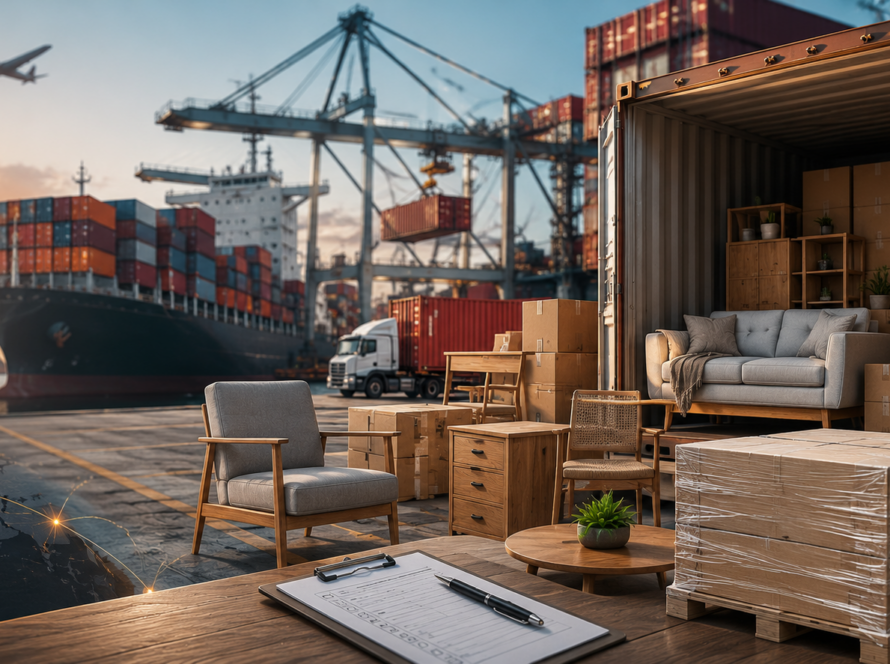


International trade is now considerably more complicated than before. In addition to concerns regarding supplier prices and logistics fees, international companies today have many other issues to consider. This includes tariffs, customs regulations, restrictions on trade and supply chain instability. This is why tariff engineering becomes such an important tool.
Tariff engineering does not mean that any company seeks to find some loopholes for avoiding duties. On the contrary, tariff engineering is a completely legitimate and highly structured approach aimed at lowering duties through proper planning.
It should be noted that a properly implemented tariff engineering technique will help businesses achieve their desired goals within the scope of regulations and rules of international trade.
This blog by Sharp Blue offers an insight into how companies importing goods use tariff engineering techniques to cope with increased import expenses, understand customs policies, and construct stronger international supply chains.
Understanding Tariff Engineering
In essence, tariff engineering involves the deliberate design, material selection, or manufacturing process modification of a good so that it qualifies under a preferable customs tariff category.
The practice is predicated on one key principle of international customs laws: goods are assessed taxes on the basis of their physical properties when being imported, and not by their intended uses or subsequent modifications.
It is necessary to distinguish between tariff engineering and those practices that are illegal and unlawful:
-
- Smuggling: Hiding the goods or completely avoiding any customs formalities
- False representation: Giving wrong details regarding the value, nature, and origin of the goods
- Tariff engineering: The legal design of goods so that they qualify for a better category.
It has been clearly established under international trade law that importers have a legal right to engineer their products in such a manner that they lawfully avoid duty, so long as total transparency and truthfulness in the customs declaration are observed.
Tariff Engineering can be achieved through:
-
- Product design
- Material substitution
- Change in assembly location
- Change in packaging
- Component separation
- Partial manufacturing in Free Trade Agreement countries
- Optimizing product classification
- Adjusting value allocation
It is that easy! As long as the product truly fits into the declared classification on importation.
How Tariffs Are Determined (Quick Breakdown)
The vast majority of import tariffs use the Harmonized System (HS), a standardized classification system used to give products a code depending on their type.
Harmonized System (HS) Codes Determine:
-
- Duty rate applicable to a particular product
- Customs classification of the product’s category
- Applicability of any other trade restrictions
Three main aspects determine tariff classification:
-
- Product’s Design, Composition, and Purpose: The same product produced from different materials and/or designed for a different purpose can have an entirely different HS code and tariff rates.
- Country of Origin: Country where the good is manufactured/transformed will influence the tariff significantly.
- Interpretation by Customs Officers: Minor design/package variations may result in the alternative classification.
Major Strategies Used in Modern Tariff Engineering
Tariffs have become a consideration that is increasingly important in the early stages of the design and development of goods and processes within businesses in the year 2026. Instead of dealing with tariffs in response to the goods having been manufactured, they have developed systems for reducing risk before manufacturing.
There are several main types of strategies employed.
1. Product and Material Optimization
One of the ways that companies can effectively use tariff engineering is through product and material optimization.
In some cases, even small design variations can impact the classification of a product for import purposes, thus influencing the duty payment.
The following criteria are commonly assessed:
-
- Composition variations
- Design changes/substitutions
- Structure changes affecting the product classification
- Functional alterations resulting in a new product classification
It does not involve unnecessary or forced alterations, but rational product optimization based on effective engineering decisions. It is especially relevant for industries whose classification depends to a large extent on material composition.
Example: A manufacturer producing luggage modifies some elements from aluminum into composites, without changing the structure of the product. As a result, the product is classified differently, and its duty rate is reduced.
2. Geographical Dispersion of Manufacturing and Supply Chain Design
Another prevalent strategy involves the dispersion of manufacturing among various countries. In this strategy, companies do not rely on only one site for manufacturing but disperse their manufacturing processes geographically to increase efficiency and effectiveness as well as reduce tariffs.
Typical strategies involve:
-
- Acquiring raw materials from a certain area
- Intermediate manufacturing at a different site
- Final assembly at yet another manufacturing location
In this way, manufacturers may effectively distribute their supply chain risks as well as handle their tariff exposure. However, in order for customs authorities to consider origin, they will have to assess whether there was enough transformation during manufacturing activities. For this purpose, it must be noted that manufacturing procedures should be substantial and cannot consist of mere superficialities.
Nevertheless, customs agencies rigorously scrutinize whether adequate transformation has taken place during manufacturing operations to support claims of origin. The critical point here is that these transformations should be real industrial activities rather than surface transformations.
Consider an example: Consumer electronics manufacture semiconductors from Taiwan, assemble circuit boards in Vietnam, and assemble the final device in Mexico to exploit regional trade arrangements and minimize duty exposure.
3. Importation of Modular and Partial Products
A number of firms have been able to minimize their exposure to tariffs through modular and partial imports.
Here, the last step in assembling the product will be done in the receiving market or other regions.
This technique is usually applied in situations where:
-
- Assembling increases the cost substantially
- The components of the product are sourced globally
- Configuration determines the nature of the product
Although this method provides tax benefits, it should be approached with caution since there is a need to determine whether the separation of the product parts is genuine or just for classification purposes.
Example: A furniture company imports wooden and hardware pieces individually rather than assembled cabinets in order to assemble the furniture locally.
4. Optimization of Trade Agreements
The utilization of free trade agreements has become one of the key components of the tariff engineering process. Despite the benefits of using preferential trade agreements, there are companies that do not take advantage of it because of its complicated nature.
More and more firms try to change their supply chain management to satisfy rules of origin as follows:
-
- Changing the place of materials acquisition
- Setting higher regional content rate limits
- Matching their manufacturing process according to trade agreements
For instance: A textile company uses fabric from Turkey instead of China in order to get a lower tariff when importing products under a regional trade agreement into Europe.
5. Packaging and Product Configuration Strategy
Even packaging design and product configuration can have an effect on how your products are classified by customs authorities.
In some situations, the products that are sold in bundled packages may be considered as one item, and this will impact their tariff codes and related duties.
A company can:
-
- Distribute bundled products in separate consignments
- Reorganize packaging designs
- Package products in different ways
This method can be used in the retail industry, consumer goods industry, electronics, and other areas.
Since packaging regulations may contain lots of details and specific terminology, a company will need to describe its product configuration.
Example: An accessory brand of smartphones does not ship charging cables and adapters together as a bundle package (“starter kit”), but individually.
6. Supplier Diversification for Tariff Management Strategy
In addition to the classification and design strategies, many firms are adopting the approach of supplier diversification as their long-term tariff management strategy.
The strategy involves creating a diversified sourcing process from various countries in order to:
-
- Decrease vulnerability in case of unexpected tariffs change
- Make the supply chain flexible
- Keep track of the ever-changing political situation
Supplier diversification is perceived not only as a cost-saving tool but also as an absolute necessity to manage risks.
Case Study: A firm that manufactures home appliances has its motors produced in India, metal cases made in Vietnam, while electronic components are manufactured in Malaysia. This makes the firm able to alter its production according to tariff changes in any region.
Compliance and Limits of Tariff Engineering
Whereas tariff engineering is legal in nature, there are clear limits to it. It is the matter of the substance rather than paperwork.
The following needs to be taken into account for compliance:
-
- Product modifications must be physical
- Processes of manufacturing should be genuine and verifiable
- Customs documentation must match the true physical form of the products during the importation stage
The goods are evaluated according to their physical characteristics rather than any other considerations.
Risk of Non-Compliance
Customs officials around the world possess extensive powers for auditing and may investigate imported goods many years after clearance.
Non-compliance usually includes the following:
- Administrative failure: Good faith administrative failures and lack of due care resulting in fines and duties
- Gross negligence: Grossly negligent classification practices, subjecting individuals to more substantial fines and higher levels of scrutiny
- Fraud: Fraudulent activities may result in financial sanctions, confiscation of goods, and even criminal prosecution
In addition to financial sanctions, non-compliance also results in:
- Delays by customs officials in clearing goods
- Additional scrutiny and inspections upon receipt of future shipments
- Supply chain disruptions
- Reputational risk with the regulatory agency
Modern Compliance Measures
In order to mitigate risks and achieve compliance, corporations tend to use more formalized measures, including the following:
- Certified product descriptions: Specifications of material composition and manufacturing methods
- Compliance reviews conducted within the organization: Validation by engineering, procurement, and legal departments
- Pre-ruling classifications: Classification decision made prior to importation that provides clear legal status regarding tariff classification
All these measures allow companies to remain compliant while engaging in reasonable cost-saving practices.
When Should NOT Tariff Engineering Be Used
The use of tariff engineering works best if there is a material balance between tariff savings and cost factors, both direct and indirect. There is often an imbalance where aggressive optimization creates more risks than benefits.
Tariff engineering must be avoided when there are alterations that affect quality, performance, certifications, or consumer expectations. The reduction of duties cannot offset any reduction in product effectiveness, warranty coverage, or damage to reputation within a competitive market environment.
Moreover, it does not work well when supply chain redesign creates excessive operational fragmentation. Although multi-country manufacturing helps minimize tariffs, it adds additional challenges related to supply chain management, logistics coordination, longer lead times, higher inventories, dependence on multiple suppliers, geopolitical issues, among others. This can easily wipe out any financial gains for products with low-profit margins.
Lastly, tariff engineering may prove to be a mistake in businesses under high-risk customs compliance environments. These include companies involved in electronics, steel derivatives, automotive components, pharmaceuticals, and industrial goods. Authorities of leading trading nations use artificial intelligence tools to detect irregular behavior regarding product classification, sources of supply, and country of origin declarations.
Of utmost importance is that companies do not indulge in tariff engineering where the method is dependent on an uncertain interpretation as opposed to solid industrial justification. In such cases, the risk of future problems due to lack of justification may be higher than the benefit from initial savings.
Durable strategies are considered the best when engaging in tariff engineering.
Conclusion
Tariff engineering has emerged as a critical field in international trade and supply chain management. As international business environments grow increasingly complex and tariff systems continually change, firms that take into consideration the impact of tariffs in their initial product and supply chain design are enjoying definite competitive advantages.
The key challenge of successful tariff engineering lies in its proper implementation. Tariff engineering is about knowing the system well enough to design within it effectively and legally.
If implemented properly, tariff engineering can enable firms to minimize landed costs, enhance their supply chain management, and increase their global competitiveness. Implemented improperly, tariff engineering poses considerable risks.
Importers that have successfully navigated their way through international business environments tend not to be those that tried to find loopholes in the system, but rather those that designed their products and supply chains to fit within the system.