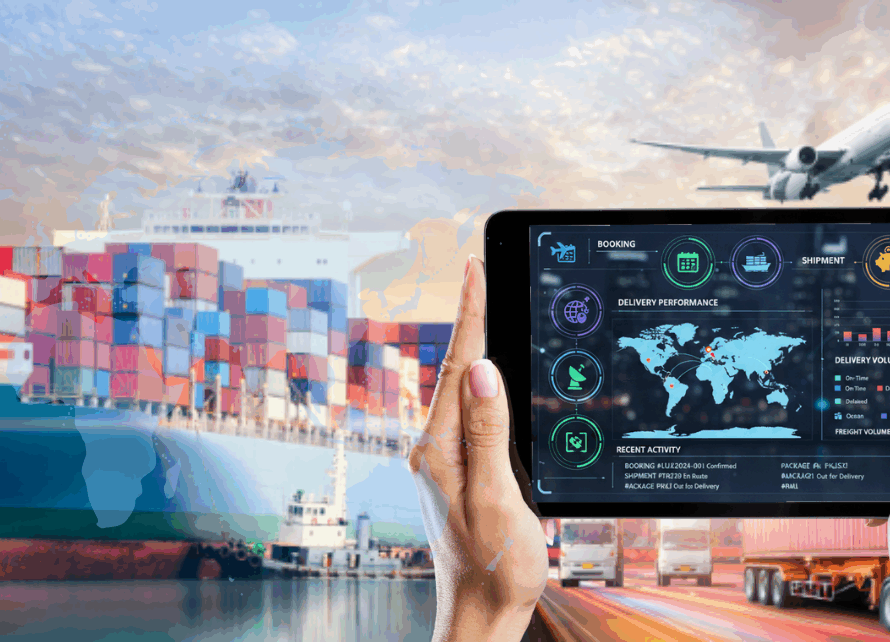


Let us begin by stating the obvious – shipping is difficult to do! From sending ten boxes to another city, to sending 10,000 containers and everything in between, there are hundreds of decisions that must be made about any given shipment. Before AI technology became valuable to the shipping industry, all shipping-related decisions were almost entirely made based on human intuition, phone calls, and educated guesses. It seems as though a new era has begun shipping today with AI-based decision-making affecting almost every element of the shipping process.
Consider that with AI being utilized as an assistant for shipping; we now have an extremely intelligent, tireless assistant that is capable of rapidly processing thousands (or millions) of pieces of data and identifying patterns that humans fail to notice. This technology is no longer a dream; it is a reality in many organizations across the globe and is improving the performance of shipping businesses, ultimately leading to improved service levels for all customers.
This blog by Sharp Blue will delve into how AI is specifically revolutionizing the three critical pillars of freight: Quoting, Booking, and Routing. We’ll explore the tangible benefits, the technologies at play, and what the future holds for this $9 trillion global industry.
1. The Transformation of Freight Quoting – From Hours to Minutes
The Old Method: Historically, quoting was done manually, and it was difficult to quote accurately. A shipper would send out several requests by phone or email to different freight brokers or carriers. The freight brokers or carriers would check their individual capacities, compute their fees for fuel surcharges, accessorial charges, and utilize the appropriate market conditions, taking hours or days to respond back to the shipper. The system was fraught with delays, inconsistencies, and lack of visibility in comparison to the new electronic quoting system.
The AI-Driven Transformation:
AI has made quoting into a real-time, dynamic and extremely precise process. Here’s the breakdown:
- Dynamic Rate Intelligence: AI platforms ingest large volumes of structured (i.e. developed by machines) and unstructured (i.e. developed by people) data points; such as spot market rates, long-term contract rates, fuel prices, congestion at ports, seasonal demand patterns and global economic indicators. Machine Learning models analyze this data to forecast the most accurate and cost-effective rate for a specific lane, weight, and service level at the moment.
- Automated Quote Generation: Once parameters (origin, destination, cargo type, dimensions) are inputted into a digital platform, the AI system can immediately generate a multitude of quotes, displaying options from the most affordable air freight to the slowest ocean freight and everything in between.
- Personalized & Strategic Pricing: With enterprise shippers, AI goes beyond single shipment pricing; rather it analyzes a company’s total shipping history and shipping patterns to develop a personalized and strategic pricing model which can include suggestions on volume-based commitments for optimal spending.
What Companies Are Achieving:
- Massive Efficiency Gains: By utilizing automated pricing and quoting, time spent on manual processes is drastically reduced; as a result, both sales and operational teams can respond quicker to customers, allowing them to concentrate their efforts on helping customers who require complex, high-value solutions.
- Improving Profits and Win Rates: With the use of intelligent pricing, shippers are able to determine more accurately how to price and value their capacity; thereby, increasing revenue per mile, maximizing the ability to utilize assets and improving competitive pricing without using unnecessary discounting.
- Quicker and Smarter Decisions: Real-time data and predictive analytics enable decision makers to make rapid decisions throughout the entire network while enhancing planning accuracy and operational performance.
- Transparency and Trust: Upfront, itemized pricing provides clear cost visibility for shippers, removing guesswork, reducing friction, and building long-term confidence.
The Sharp Blue Approach: While we leverage AI-driven market data tools for rate intelligence, we believe the final quote should be curated by an expert. Our agents use AI-generated insights as a powerful baseline, then apply their knowledge of your specific business, unique cargo needs, and longstanding carrier relationships to craft a tailored, optimal quote. This ensures you get both competitive market rates and the security of human oversight.
2. The Revolution in Booking – Seamless, Automated, and Proactive
The Old Method: Before AI, making a booking typically involved a lot of going back and forth with someone, looking up different carriers’ schedules, confirming with the carrier that there was enough space available, and frequently communicating to verify there would be capacity available when you needed it. When using this process, it was easy to make errors in your bookings, overbook with several carriers, or have late cancellations.
How AI Is Automating and Enhancing Booking
Now that AI has been introduced into the process of booking freight, the task of booking a load is an integrated, seamless, proactive process as opposed to a transactional activity.
- Load Matching Intelligence: AI bookings can automatically match loads with the available capacity of carriers based on factors such as location, destination, equipment type, cost, and prior performance. The ability to match in real time maximizes carrier revenue, reduces empty mileage, shortens the cycle time between booking and pickup, and improves emissions.
- Automated Documentation & Communication: NLP AI systems can read/process e-mails, pdf files or messages and extract shipment details from them to auto-complete an electronic bookings form. They will also create standard documents and offer 24/7 chatbot tracking & routine inquiry support; reducing manual effort while providing a consistent level of service with improved response times.
- Capacity Forecasts & Planning: AI models evaluate many sources of VMS (vendor management system) data, including historical actual if they have any lend on that route, as well as current weather and road conditions, and generate highly accurate predictions for the potential for capacity constraints on any given route based on expected lane congestion and seasonality. Capacity forecasting allows shippers to make more timely bookings during peak season and helps carriers to better position their assets in order to improve reliability and maximize usage within an entire network.
What Companies Are Achieving:
- The shift from Reactive to Proactive: With AI technology in place, bookings can be made ahead of time by predicting how many spaces will be available in the future. This allows businesses to reserve spaces before demand rises and the market becomes more limited on availability.
- The Shift from Manual to Touchless: Booking confirmations are now automated from quote to confirmation, eliminating long wait times and reducing the chance of errors in execution.
- The Shift from Transactional to Experience-Based: The ability to accept instant confirmations and receive real-time updates have improved the overall process for booking. Furthermore, with 24/7 chatbots to assist customers, this type of service is now very customer-focused.
Sharp Blue Approach: At Sharp Blue, we partially utilize AI in our booking process to create seamless back-office efficiency. When booking confirmations, carrier rate sheets, or shipping instructions are uploaded, our AI modules automatically scan, extract key data (like booking numbers, dates, and terms), and populate our records. This eliminates manual data entry errors, keeps our customer database instantly updated, and allows our team to focus on.
3. The Intelligence in Routing – From Static Maps to Dynamic Networks
The Old Method: Before AI, Routing has historically been done via GPS, TMS, Telematics and Rule-based Systems. While route status was accessible via digital data and in real time, decisions regarding routing were based on fixed rules and historical averages and were therefore not predictive at all. The systems in place showed ships that were in transit and place delivered cargo at but did not show what would occur in the future. Unforeseen conditions such as traffic, weather, congestion in ports, or customs delays created a non-predictable response that was manual in nature. The network was connected but not truly intelligent.
The AI-Driven Transformation:
AI is revolutionizing the way routing is done by changing it from an activity that is carried out before the trip starts to an ongoing, self-optimized activity throughout the entire logistics network.
- Dynamic Routing in Real Time: AI is taking live data streams such as GPS traffic, weather, road closures, port queues and incident reports and continuously recalculating the routes that each truck will take. For example, if there was a truck operating out of Dallas overseeing a time-sensitive delivery that needed to go to a specific location, and there was heavy congestion, then AI can recalculate the route the truck would take to avoid that congestion while allowing it to meet or exceed its original delivery timeframe.
- Optimization of Multi-Modal Networks: AI can intelligently select not only which route the truck will take but also the best overall path for the truck, the rail lines it may need to use, and the best ocean and air options that are available. By using dynamic optimizations based on many different factors, including cost, speed and reliability, AI can create the most efficient routing possible.
- Intelligent Forecasting of Disruptions and ETA Calculations: AI is forecasting when potential delays will happen using a combination of historical data and current data for a particular route. By identifying patterns and using live traffic data, AI will generate highly accurate predictive ETAs and flag high-volume shipments delays in advance.
- Carbon-Optimized Routing: AI is producing a route optimized by time, cost and carbon emissions. AI is able to generate routes for delivery vehicles that reduce fuel consumption and CO₂ emissions compared to other available routes. Specifically, DHL uses AI routing to reduce distance travelled and CO₂ emissions within its fleet of vehicles.
What Companies Are Achieving with AI-Powered Routing
- Reducing Delivery Failures: Delivery failures caused by traffic, port congestion, and weather-related disruptions are reduced through using predictive estimated arrival times (ETAs) and proactive rerouting.
- Smarter Use of Capacity: Across the Network AI continuously balances loads across modes and lanes, improving how trucks, rail, and vessels are utilized without creating bottlenecks elsewhere.
- Recovering Through Networks Quickly: Shipments can be rerouted within minutes, rather than hours, in the event of a disruption, by using AI, to ensure small disruptions do not turn into significant service failures.
- Reduced Operating Costs: Through AI-based route planning, companies can save on fuel costs, reduce fees from long wait times at ports, and use their assets more efficiently by reducing unnecessary miles driven, idling or waiting for cargo to be loaded.
Sharp Blue Approach: At Sharp Blue, we combine human experience with practical AI tools to make better routing decisions. For example, our shipment tracking platforms use AI to predict potential delays and When a risk is flagged, our team reviews the options and can choose a faster route, adjust carrier schedules, or plan alternate pickups — improving efficiency without fully relying on AI.
Challenges and Considerations: Navigating the AI Implementation Journey
Although deploying AI technologies to transform freight quoting, booking, and routing processes can be tremendously beneficial, several critical roadblocks must be addressed before any AI-enabled solutions can be successfully implemented.
- Data Integrity Matters: Good Data = Real Benefits from AI. AI is only as good as the data it relies on to make decisions. In logistics, the data required by AI systems is often stored in legacy platforms, spreadsheets, PDF documents, and emails. Therefore, if the data being used to power the AI system contains inaccuracies, the resulting quotes, routing decisions, and bookings will also contain substantial inaccuracy.
- Black Box Problem & Accountability Issues: When utilizing advanced AI systems, organizations often face issues related to their functionality being more like “black boxes“. This increases organizational risk as a result of an AI system making a routing or shipment decision. If one of your carriers fails or one of your routes causes damage, your organization could be held accountable for your AI system’s decision.
- Legacy TMS, ERP, and Carrier Connectivity Issues: Many logistics companies use legacy TMS, ERP, and carrier portals that do not easily interface with AI based solutions. Integrating AI systems can be expensive and time-consuming. If organizations do not find scalable and sustainable ways to integrate the AI tools and processes into their existing business systems, new “data silos” could emerge, hindering the speed with which the organization receives its ROI on their investments in new AI technologies. A phased, API-based approach is typically the best path forward.
Conclusion
AI has transformed freight quoting, booking and routing, showing how powerful technology can reshape foundational industries. The logistics sector has gone from a fragmented, manual and reactive to an integrated, automated and predictive-based industry. For shippers, this transition will provide lower cost, increased visibility and better reliability in their supply chains. For carriers, it will yield greater asset utilization, less waste and improved collaborative partnerships. For the earth, this will help create a more sustainable model for moving goods.
Businesses need to understand that freight logistics will be algorithm-driven and they must start understanding, using, and implementing AI into their logistics strategies now. Through partnering with the right technology partners and fostering a workplace culture focused on data-driven decisions, organizations will not just survive this transition but will thrive in an increasingly intelligent global trade environment.